From First Question to Confirmed Appointment: How an AI Agent Can Improve the Patient Journey
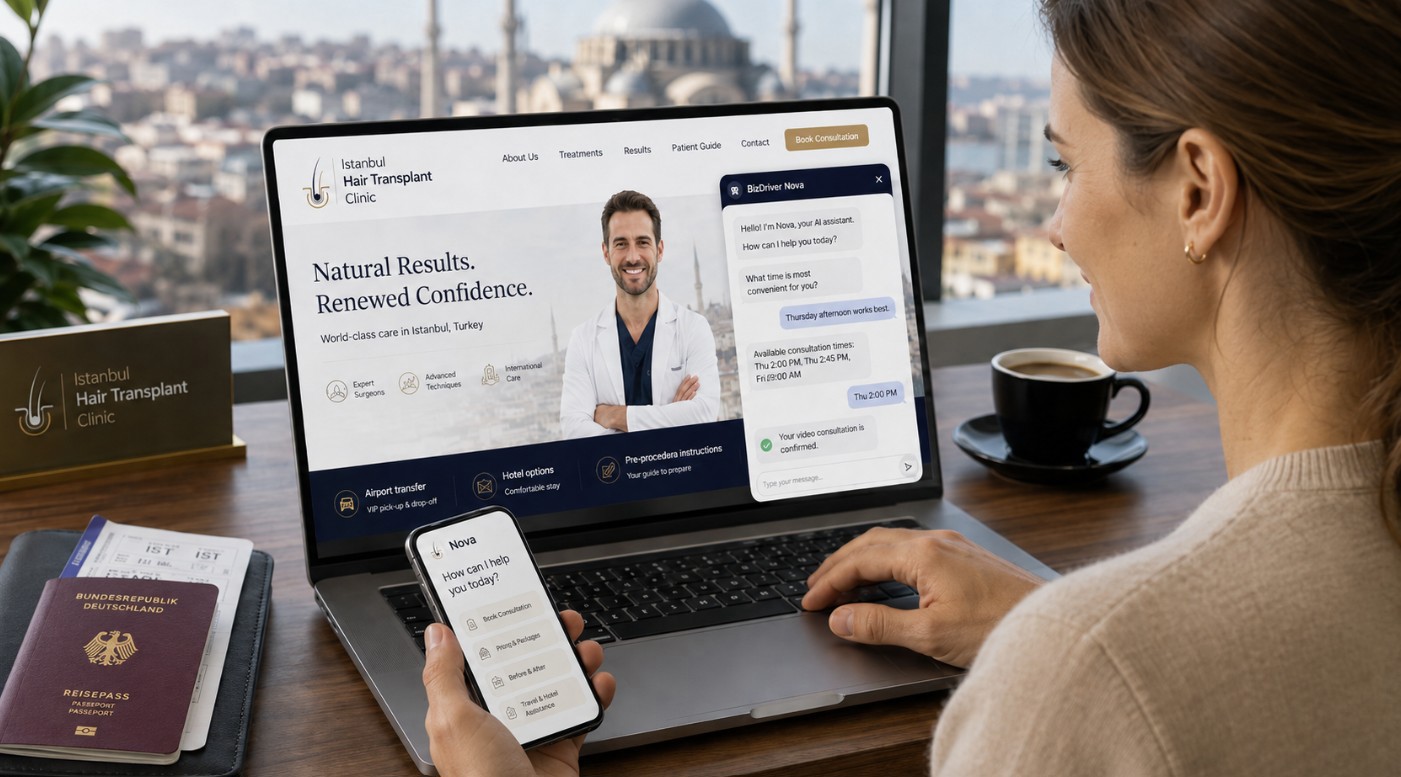
Anna had been thinking about hair transplantation for almost a year. She had compared clinics, read patient reviews, studied treatment methods, and finally found a clinic in Turkey that seemed trustworthy. There was only one problem: Anna would have to travel to Turkey from abroad.
She needed to understand how long she would have to stay in Turkey, whether she was a suitable candidate, what the treatment would cost, and when the clinic could receive her. It was already late in the evening when she opened the clinic’s website, and she did not expect anyone to answer until the following morning.
Then a chat window appeared. “Hello! I’m the clinic’s virtual assistant. How can I help you?”
Anna typed “I'd like to book a consultation.” Nova asked which language she preferred and continued the conversation in German, her native language. It explained that the first consultation could be held online and asked her to choose the days and times that would be convenient.
Anna selected Thursday afternoon. The Agent checked the clinic’s available appointment times and offered three options. A few moments later, the consultation was confirmed, and Anna received the details by email.
But the conversation did not end there. The agent asked whether Anna would like to provide some preliminary information before meeting the doctor. It guided her through several simple questions about her age, previous treatments, expectations, and relevant health information. The agent also explained how to upload photographs securely for the doctor’s initial review.
Before collecting any sensitive information, the clinic had configured their Agent to provide an appropriate consent notice and explain how the information would be used. For medical questions that required professional judgment, the agent would not attempt to diagnose the patient. Instead, it could forward the request to a doctor or clinic representative. So, by the time Anna joined her consultation, the clinic already had the basic information needed to make the conversation productive.
After the doctor confirmed that she was a suitable candidate, Nova helped Anna plan the next steps. It explained how many days she would probably need to stay in Turkey, what would happen during each stage of the visit, and which documents she should bring.
The agent could also answer common practical questions:
-
Is airport transfer available?
-
Does the clinic recommend nearby hotels?
-
When can the patient fly home?
-
Are follow-up consultations available online?
-
Which services are included in the treatment package?
When Anna decided to proceed, Nova helped her request a treatment date that matched her travel plans. The agent collected her preferred arrival period, checked the available schedule, and passed the request to the clinic team for final approval.
In the days before the trip, Anna received automatic reminders, preparation instructions, the clinic address, and information about her airport transfer. She did not need to search through old emails or repeat the same questions to several employees.
For the patient, this creates a smoother and more reassuring experience. For the clinic, it means that website visitors can receive clear answers and take the next step even outside regular working hours.
BizDriver AI Agent can be configured using selected website pages, clinic documents, service descriptions, frequently asked questions, and specific instructions. It can communicate in multiple languages, collect initial requests, schedule consultations, guide patients through preparation steps, and connect them with a real clinic representative whenever human assistance is needed.
IN fact, BizDriver agent can do much more, not only for patients. It can also become a highly useful assistant for clinic staff and personnel. But that will be the plot for a different blog post.